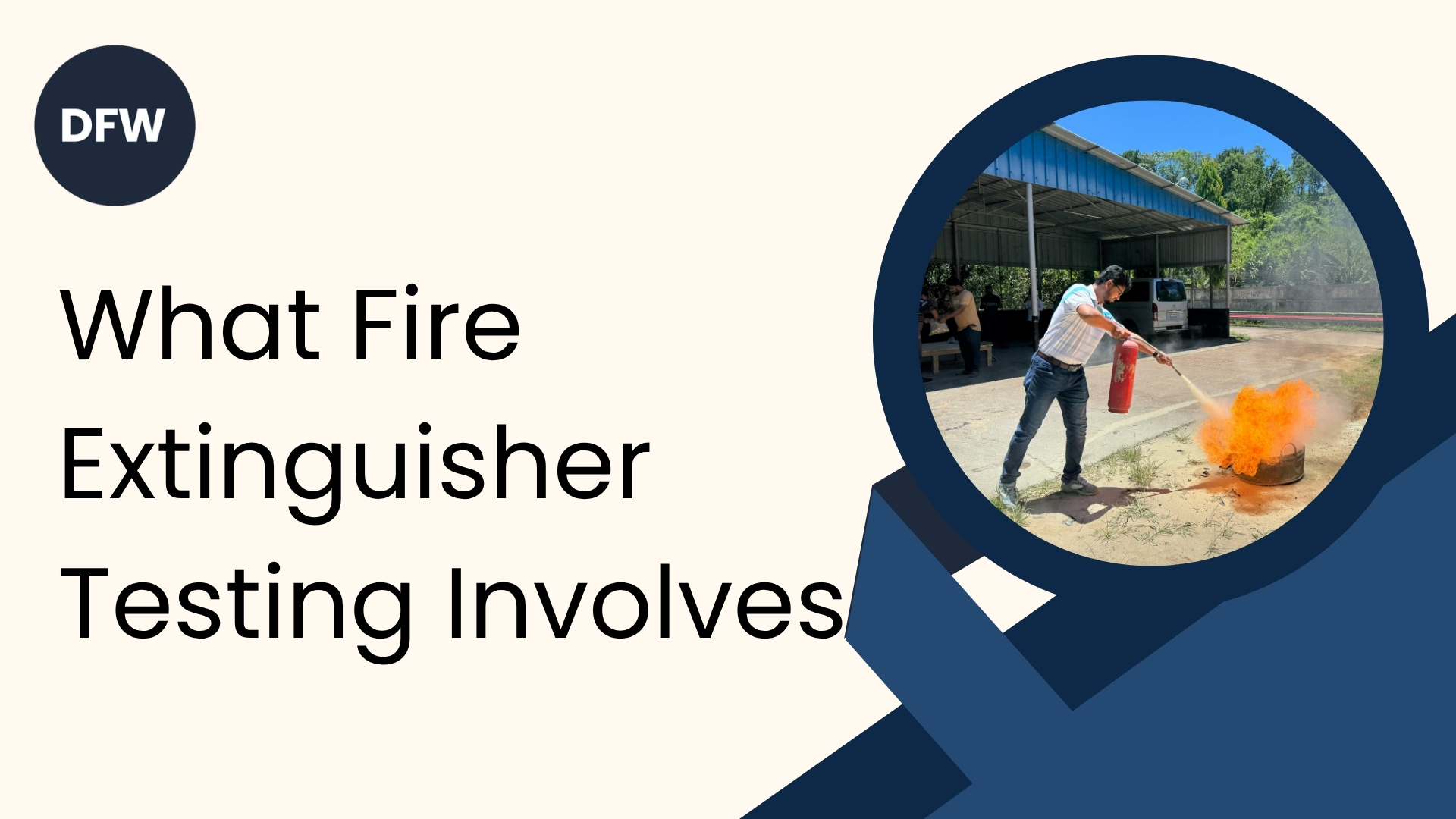
Fire extinguisher testing isn’t just a quick glance at the device. It’s a systematic process that ensures the extinguisher will perform under pressure, literally. Professional technicians follow NFPA 10 standards, which outline the specific steps for inspections, testing, and maintenance.
Here’s what the process usually includes:
1. Visual Inspections: Checking for dents, corrosion, or missing parts.
2. Pressure Checks: Ensuring the gauge is in the correct range.
3. Seal & Pin Verification: Making sure the tamper seal is intact.
4. Weight & Condition Testing: Confirming the extinguisher hasn’t lost charge.
5. Hydrostatic Testing (as required): Ensuring the cylinder can withstand pressure.
These steps may sound technical, but they directly affect whether your extinguisher will work during an emergency.