
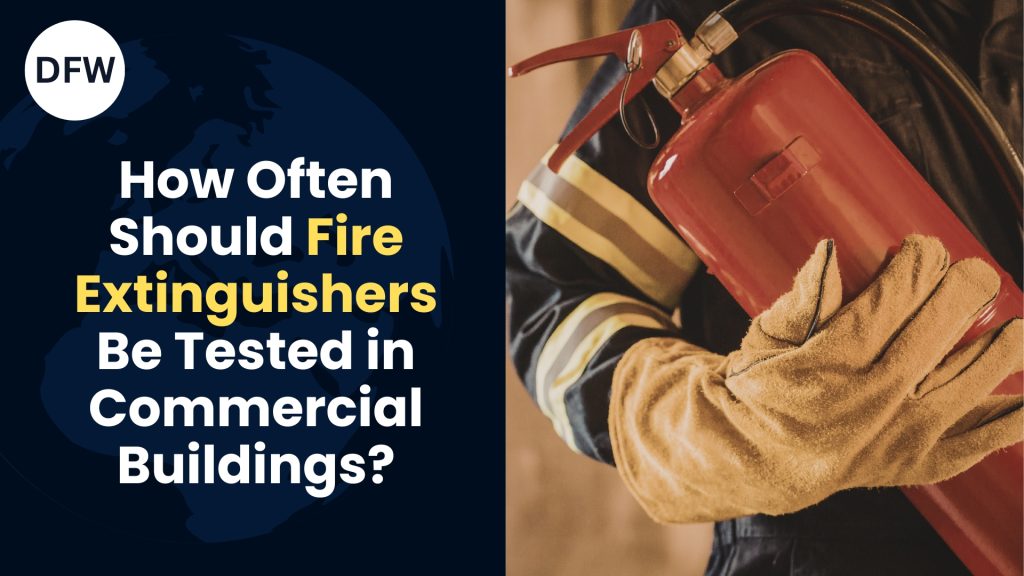
How Often Should Fire Extinguishers Be Tested in Commercial Buildings?
When was the last time you checked your building’s fire extinguishers?
It’s a simple question, but one that many property managers and business owners struggle to answer with confidence. Fire extinguishers are often mounted on walls, easy to overlook, and rarely used. But when an emergency happens, they become one of the first lines of defense.
So here’s the real question:
Can you trust your fire extinguishers to work when you need them most?
Let’s break down how often they should be tested, and why it matters more than most people think.
Why Fire Extinguisher Testing Is Often Overlooked
In many commercial buildings, fire safety is treated as a checklist:
- Fire alarms? Installed.
- Sprinklers? Working.
- Extinguishers? Present.
But presence doesn’t equal performance.
Over time, fire extinguishers can:
- Lose pressure
- Become damaged or blocked
- Expire without notice
- Be used and not refilled
Now ask yourself:
If a fire started today, would every extinguisher in your building function properly?
If there’s any doubt, it’s time to take a closer look.
What Does NFPA Say About Fire Extinguisher Testing?
The NFPA 10 standard outlines clear requirements for inspecting and maintaining fire extinguishers in commercial buildings.
But instead of memorizing codes, let’s simplify it with a practical approach.
1. Monthly Visual Inspections
Fire extinguishers should be visually inspected every month.
This doesn’t require a technician; it can be done in-house. The goal is to ensure:
- The extinguisher is in its designated place
- There are no visible signs of damage
- The pressure gauge is in the correct range
- The safety pin is intact
- There are no obstructions
Here’s a Question:
If someone needed to grab an extinguisher quickly, would it be accessible and ready to use?
2. Annual Professional Maintenance
At least once a year, fire extinguishers must undergo a professional inspection and maintenance check by certified technicians.
This includes:
- Thorough internal and external inspection
- Verification of pressure levels
- Checking seals and components
- Ensuring compliance with NFPA standards
- Proper tagging and documentation
This is where compliance becomes critical.
Ask yourself:
Would your current records pass a fire marshal inspection today?
3. Hydrostatic Testing (Every 5–12 Years)
Fire extinguishers also require hydrostatic testing at longer intervals, depending on the type:
- Typically, every 5, 6, or 12 years
This process checks the structural integrity of the cylinder to ensure it can safely hold pressure.
It’s not something you can skip, and many property managers forget about it until it’s overdue.
What Happens If You Skip Testing?
Let’s think about the consequences.
If fire extinguishers aren’t properly maintained:
- They may fail during an emergency
- Small fires can quickly spread
- Employees and tenants are put at risk
- Property damage increases significantly
And beyond safety risks:
- You could fail inspections
- Face fines or penalties
- Experience insurance claim issues
- Be exposed to legal liability
Now consider this:
Is skipping routine testing really saving money, or increasing risk?
How Testing Protects Your Business
Regular fire extinguisher testing isn’t just about compliance; it’s about control.
When extinguishers are properly maintained, you gain:
- Immediate response capability during small fires
- Reduced damage and downtime
- Confidence during inspections
- Stronger insurance support
- Peace of mind for tenants and employees
In many cases, a properly functioning extinguisher can stop a fire before it spreads, saving thousands in damage and potentially lives.
Common Mistakes Property Managers Make
Even experienced property managers run into challenges like:
- Forgetting monthly inspections
- Missing annual servicing deadlines
- Poor documentation and recordkeeping
- Not replacing expired units
- Relying on unverified service providers
NEPQ Question:
How confident are you that every extinguisher in your building is fully compliant right now?
If you’re unsure, you’re not alone, and it’s exactly where a better system helps.
The Smart Way to Stay Compliant in 2026
Managing fire extinguisher compliance doesn’t have to be overwhelming.
Here’s a simple approach:
- Schedule monthly internal inspections
- Partner with certified professionals for annual servicing
- Track hydrostatic testing deadlines
- Maintain organized documentation
- Set reminders for recurring checks
Or better yet, work with a trusted network like DFW Fire Pump Testing, where we connect you with NFPA-certified fire safety professionals who handle everything for you.
So, How Often Should Fire Extinguishers Be Tested?
Let’s simplify the answer:
- Monthly: Visual inspections
- Annually: Professional maintenance
- Every 5–12 years: Hydrostatic testing
That’s the standard, but more importantly, it’s your safety system in action.
What This Means for You
Fire extinguishers are small devices, but they play a huge role in protecting your building.
The real question is:
Do you want to hope they work… or know they will?
By staying proactive, organized, and compliant with NFPA standards, you protect:
- Your people
- Your property
- Your business reputation
At DFW Fire Pump Testing, we help simplify fire safety compliance by connecting you with trusted professionals who ensure your systems are always ready.
📞 Call +1 (855) 578-5750
🌐 Visit https://dfwfirepumptesting.com
Because when it comes to fire safety, certainty matters.