
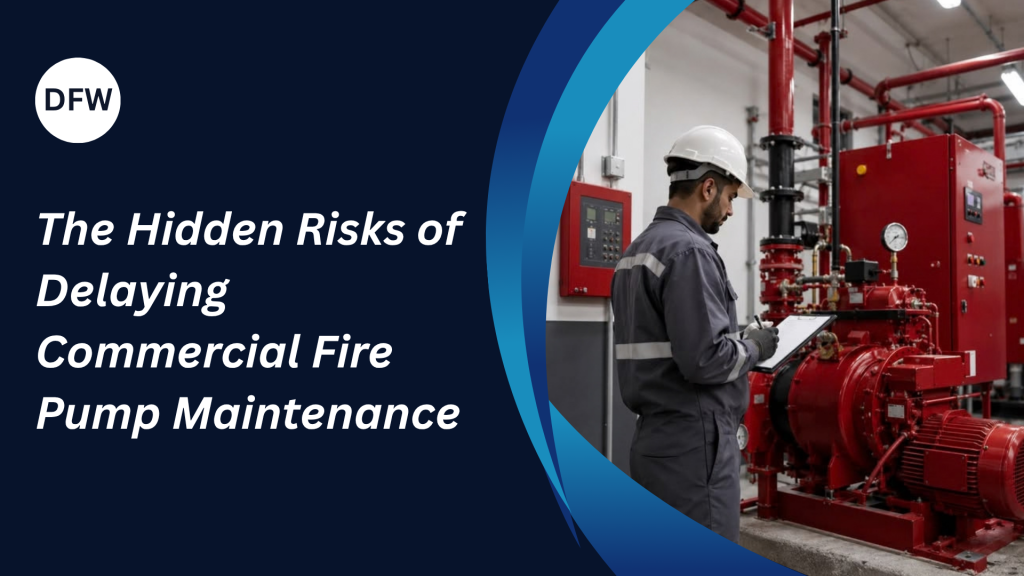
The Hidden Risks of Delaying Commercial Fire Pump Maintenance
When was the last time your commercial fire pump received a professional inspection or maintenance check? If you manage a commercial property in Dallas-Fort Worth, it can be easy to focus on everyday operations and overlook equipment that may sit quietly for months. But when an emergency happens, your fire pump needs to perform immediately as part of a reliable commercial fire protection system.
Delaying commercial fire pump maintenance can create risks that are not always visible during a routine walk-through. Small performance issues can develop into serious problems, leaving your fire protection system less prepared when it matters most.
What Can Happen When Maintenance Is Delayed?
A fire pump may appear to operate normally while developing problems with pressure, flow, electrical components, controllers, valves, or connected equipment.
Some hidden risks include:
- Undetected performance problems: The pump may not deliver the expected pressure or flow when needed.
- Unexpected equipment failures: Worn or damaged components can develop into more serious issues.
- Emergency repair costs: Small problems may require urgent service when left unaddressed.
- Testing failures: Changes in pump performance may become apparent during required testing.
- Compliance concerns: Missed testing can make fire safety documentation harder to maintain.
- Operational disruptions: Emergency repairs can interfere with normal building operations.
- Incomplete records: Delayed service can make it difficult to determine when equipment was last inspected or repaired.
Why Fire Pump Testing Matters
A visual inspection can show whether equipment appears clean, accessible, and in reasonable condition. It cannot confirm how the pump performs under operating conditions.
That’s where fire pump flow testing becomes important. Testing evaluates pressure and flow to help determine whether the pump is delivering the expected performance.
For commercial properties, annual fire pump testing should be part of an ongoing maintenance plan rather than something scheduled only when an inspection is approaching.
Regular testing can also create a performance history and help property managers identify changes that deserve further investigation.
Maintenance Supports Fire Safety Compliance
Fire protection equipment is subject to applicable testing and inspection requirements, including NFPA 25 fire pump testing requirements. Keeping testing and maintenance on schedule can help property owners maintain appropriate documentation.
Property managers should track:
- Previous fire pump inspection dates
- Annual testing and flow test results
- Repairs or corrective work
- Maintenance recommendations
- Testing and service documentation
- Upcoming testing dates
Organized records can make compliance responsibilities easier to manage and help identify recurring equipment concerns.
Don’t Focus on the Pump Alone
Your fire pump is only one part of a commercial fire protection system. Other equipment may also require regular inspection and testing based on the property’s systems and applicable requirements.
A broader maintenance program may include:
- Fire sprinkler testing
- Fire extinguisher testing
- Fire extinguisher pressure testing
- Fireline backflow testing
- Fire protection system testing
- Fire pump inspection and maintenance
Looking at the complete system can help prevent one overlooked component from becoming a larger fire protection concern.
What Should Dallas-Fort Worth Property Owners Do?
If your fire pump testing or maintenance schedule has fallen behind, don’t wait for a problem to become an emergency.
A practical approach is to:
- Review your maintenance records to see when the pump was last inspected and tested.
- Confirm upcoming testing dates so required services aren’t overlooked.
- Schedule professional testing when your system is due.
- Review test results and address recommended corrective work.
- Keep documentation organized for future inspections.
- Monitor performance over time to identify unusual changes.
Whether you need fire pump testing in DFW, fire pump testing in Dallas, TX, or fire pump testing in Fort Worth, reliable professional fire protection services can help you better understand the condition and performance of your commercial fire protection equipment.
Don’t Let a Delayed Test Become an Emergency
The biggest risk of delaying commercial fire pump maintenance is not knowing what has changed inside the system until you need it.
Regular inspections, testing, maintenance, and proper documentation provide a proactive way to identify problems and support fire safety compliance. For commercial property owners and facility managers, staying ahead of maintenance is far better than discovering a fire pump problem during an emergency.
Your fire pump may not be something you think about every day, and that’s exactly why scheduled maintenance matters. A system that looks fine from the outside still needs professional testing to confirm that it can deliver the required performance when called upon.
Don’t wait for a failed test or emergency repair to reveal a problem. Keep your commercial fire pump testing and maintenance on schedule and give your fire protection system the attention it deserves.